Wingfoil Wave Spots in Europe You Have Not Ridden
Five under-the-radar European wingfoil wave spots, plus one Brazilian bonus. Wind, tides, best months and the honest catch for every single one of them.
WingfoilFrancePortugalUnited KingdomWavesIntermediateSpring and autumn
Ask ten wingfoilers where to ride waves in Europe and you get the same four answers: Tarifa, Fuerteventura, Gran Canaria, the Basque coast. Good answers. Crowded ones too. The five spots below sit outside that circuit, and every one of them delivers proper wave riding when the swell and the wind line up. Two of them are in England, which tends to surprise people. Two are on the French Atlantic coast within a couple of hours of each other, so you can do both on one trip. None of them are secret to the locals. They are just missing from most riders lists.
This is written for riders who already foil confidently and want their first or their fiftieth wave session. Where a spot suits beginners, it says so.
Quick glance
| Spot | Wind season | Wind | Water | Best for |
|---|---|---|---|---|
| La Tranche-sur-Mer France | May to September | SW, W, NW thermal | Waves at Le Phare, flat in the bay | Everyone, four launches to choose from |
| Île d''Oléron France | April to September | W, SW, NW, N | Open swell northwest, flat east | Seven launches, every level |
| Bigbury-on-Sea United Kingdom | March to May, September to November | E, NE, SE | Waves and fast flat water | Port tack wave riding |
| Daymer Bay United Kingdom | March to June, September to November | N, NW, SW, S | Soft waves wrapping the point | A first wave session |
| Praia de Faro Portugal | March to September | NW, W | Lagoon flat, ocean waves | Warm water, long season |
| Ibiraquera Brazil, bonus | November to April | S, SW, NE | Lagoon flat, ocean waves nearby | A winter escape |
La Tranche-sur-Mer, France
Thirteen kilometres of Atlantic beach in the Vendée, and a thermal that fires through summer because the gap between the mainland and the Île de Ré squeezes the northwesterly and speeds it up. From May to August the sea breeze turns up often enough to plan a week around it. Outside those months you are on frontal systems, which still work but ask for more forecast watching.
The spot has four launches, and they are not interchangeable. The bay side gives you flat, sheltered water. Le Phare is the wave zone and the official kite and wing area from May through September. When a swell arrives, Le Phare breaks over a rocky shelf with current and a shorebreak, and it works best from mid-tide to high water. That is the honest catch: it is a real wave spot with real consequences, not a friendly beach break. If you have not ridden a reef before, start in the bay, watch Le Phare for a tide cycle, then go.
Wind range is roughly 12 to 28 knots and the spot takes southwest, west and south. Several schools operate in town, so gear rental and a lesson are easy to arrange.
Best for: intermediate riders in the bay, advanced at Le Phare. Work on your bottom turn somewhere forgiving first.
Île d'Oléron, France
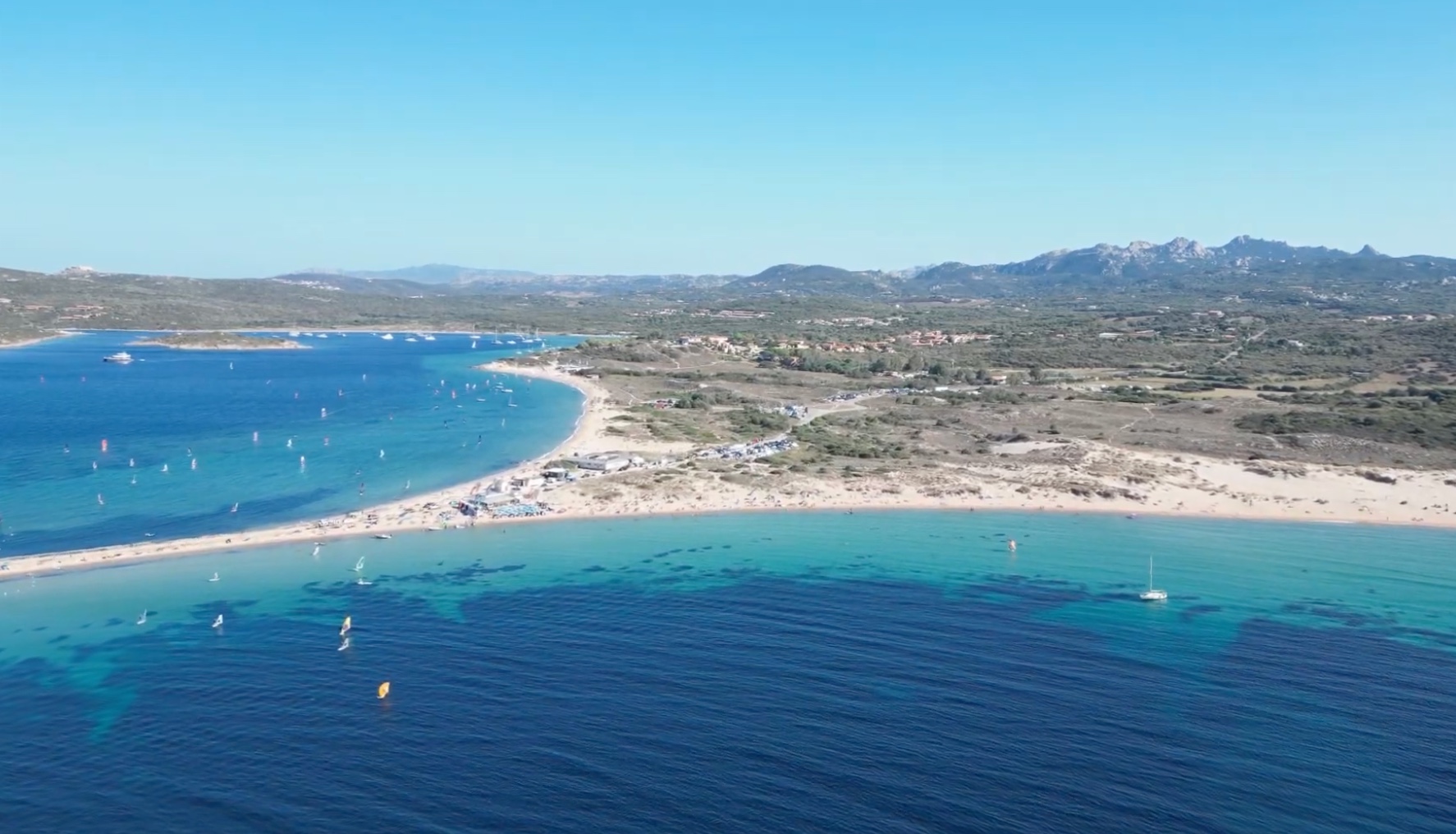
France's second largest island, sitting off the Charente-Maritime coast about 80 kilometres south of La Tranche. Seven launches are spread around a coastline that changes character completely depending on which side of the island you are standing on. The sheltered east gives you shallow flats. The exposed northwest tip gives you raw Atlantic swell. Same island, same day, two entirely different sessions.
Les Huttes at Saint-Denis-d'Oléron is the one you come for. Five kilometres of exposed beach on the northwest corner, rarely crowded, with a dedicated kite and wing zone in summer. It works on anything from southerly through to northwesterly. It also serves up the strongest gusts on the island, and there are rocks and current to think about around the big tides. Vertbois and La Passe des Soeurs nearby stay quiet and are where the schools tend to take people.
When the swell is too much, or you simply want to go fast, cross to the east coast. La Perroche is the popular one, sheltered behind the Pertuis d'Antioche, with west and northwest arriving cross-shore over flat water. It fills up on summer weekends. Plaisance and Boyardville go flat at low tide and stay quieter. The catch across the whole island is the tidal range, which is big enough that a spot can be unrecognisable six hours later.
Best for: a week where you do not want to commit to one kind of riding. Five wingfoil schools operate on the island, so rental and coaching are easy to arrange. April through September, with west, southwest and northwest the directions that count.
Bigbury-on-Sea, United Kingdom
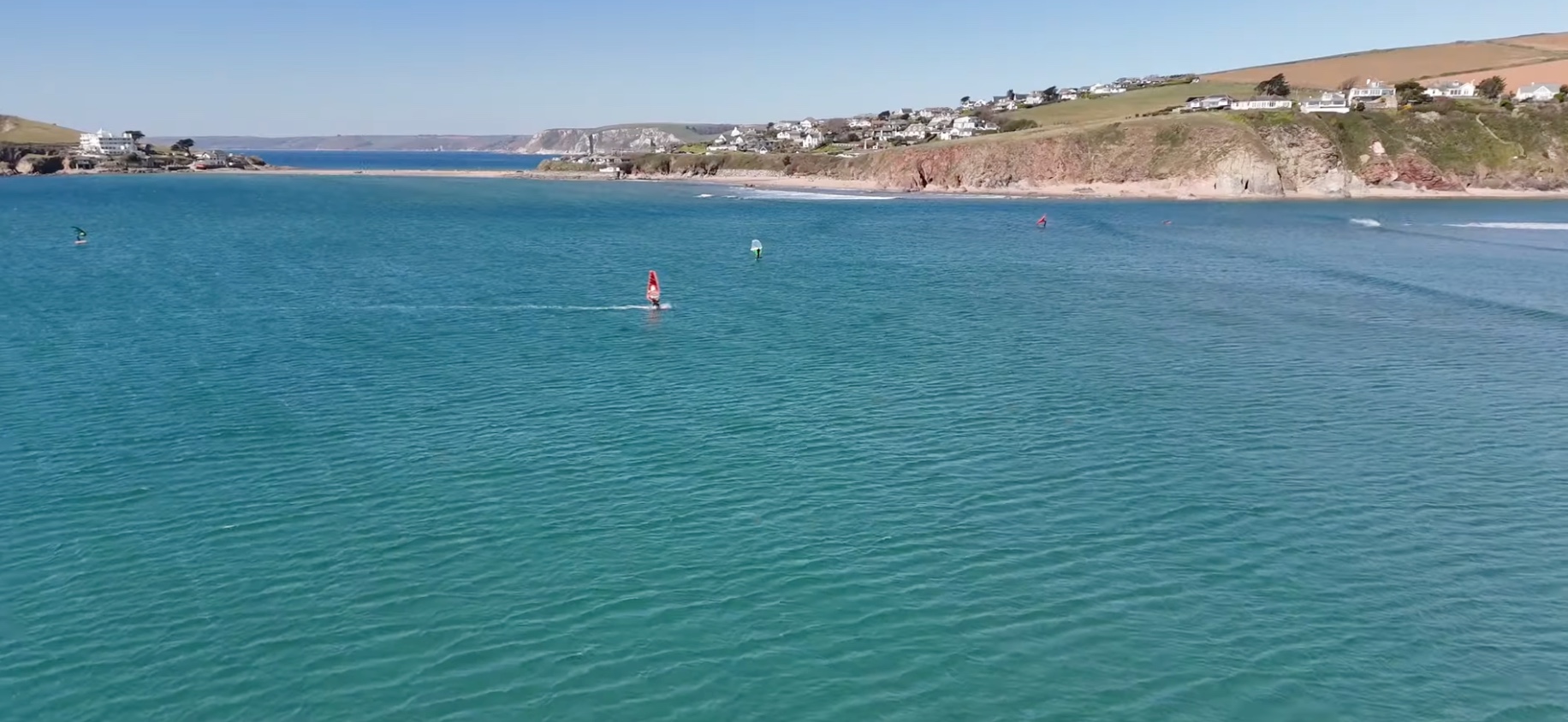
South Devon, about 20 kilometres southeast of Plymouth, on a broad south-facing bay with Burgh Island sitting 250 metres offshore. On a good easterly this is some of the best port tack wave wingfoiling in England, and almost nobody outside the southwest knows that.
Here is what makes it work. East and northeast wind comes down the river valley and accelerates along the beach, which means the forecast is often wrong in your favour. Locals reckon on 5 to 10 knots more than the models say on sunny easterly days. Near the estuary mouth that same wind gives fast flat water. Further out, easterly swell sets up the wave riding. The spot picks up Atlantic swell and works in most wind directions, so it is less fussy than its reputation suggests.
Tide matters more than anything. Low to mid is the window. Two hours either side of high tide the beach disappears and so does your launch. March to May and September to November are the months that deliver, which makes this a spring and autumn spot rather than a summer one.
Ledner Sands nearby is worth a look on the same trip. No school teaches wing here, but Kite Barn at West Buckland is two kilometres inland and repairs wings, bladders and bridles, with a demo fleet if you want to try something before you buy.
Best for: intermediate and up, riders comfortable on port tack. Pack a decent wetsuit; this is the English Channel.
Daymer Bay, Cornwall, United Kingdom
North Cornwall, tucked inside the Camel Estuary across from Rock. The waves here wrap around the point and feed into the beach soft and well spaced, generally about a metre smaller than the rest of Cornwall. That is exactly why it belongs on this list. It is one of the friendliest wave setups in the country, and a genuinely good place to ride your first proper wave on a foil.
The beach is flat and shallow, so you wade out a fair distance before there is depth for the foil. Conveniently, that is roughly where the waves start peeling in. North and northwest bring the cleanest conditions. Southwest works for the waves. Southerlies push you out to sea and easterlies turn the air into rubbish, so skip both.
The catch is the estuary. The outgoing tide runs up to 8 knots at times and the rip at mid tide will catch you out if you are not watching. Launch mid to high water. Experienced wave riders head 500 metres offshore to the Doom Bar in west to southwest wind, but that is a different level of commitment and the name is not a joke.
Poseidon in Newquay is about half an hour down the coast and runs wing lessons at Daymer when the tide and wind line up, which is the easiest way in if you have not ridden an estuary before. One more thing: in July and August there is a kiting ban between 10am and 6pm. Rules change, so check locally before you load the van. Rock village has parking, toilets and a café.
Best for: your first wave session, and riders who want to practise a top turn on something that forgives mistakes.
Praia de Faro, Portugal
A narrow barrier island inside the Ria Formosa Natural Park, ten minutes from Faro Airport. That last detail matters more than it sounds. You can land, collect a car and be on the water inside an hour, which makes this one of the easiest long weekends in Europe.
Same two-sided geography you get on Oléron, squeezed into a much smaller space. Lagoon side: flat, shallow, sheltered. Ocean side: nine kilometres of beach with shifting sandbanks that produce some of the most approachable waves in the Algarve. Winter brings chest-high sets, summer is smaller and mellower.
The wind is Nortada again, northwest, driven by hot air over the Alentejo plains against the cool Atlantic. It ramps up around one or two in the afternoon and runs 15 to 25 knots until evening. Forecast models get the direction right and underestimate the strength, which is a good kind of wrong. March through September is the window, with July the most reliable month.
Park at the main beach car park near the airport road bridge. On the ocean side, watch for swimmers in summer. This is a popular beach and you are the fast-moving object.
Best for: riders who want a long season and warm water without a long flight.
Bonus, and this one is not in Europe: Ibiraquera, Brazil
Worth breaking the rule for. Lagoa de Ibiraquera is a large shallow lagoon in Santa Catarina, south of Florianópolis, with Atlantic rainforest behind it and a barrier beach in front. The channel connecting the lagoon to the ocean funnels the sea breeze, and the lagoon itself is glassy flat.
Two winds run here and they behave differently. The Vento Sul is a south to southwest frontal wind driven by high pressure systems coming up from the south, 14 to 26 knots, and it arrives when it arrives. The other is a northeast sea breeze that fills in on calm afternoons, 10 to 18 knots, roughly one in the afternoon until six. Between them you get wind on about twelve days a month through the season.
The season is the whole reason it is here: November to April, which is when Europe is cold and grey. Water is warm essentially year round. For waves you cross to the ocean side, where the swell is bigger in the Brazilian winter and the wind is better in summer, so you trade one for the other depending on when you go.
Best for: a two-week winter escape where the lagoon handles the light days and the ocean handles the good ones.
How to choose between them
If you have never ridden a wave on a foil, go to Daymer Bay or the ocean side at Praia de Faro. Both are small, soft and slow enough to think.
If you want the most sessions per week of holiday, Praia de Faro in July or the French Atlantic coast in June. Thermal wind means you can plan around it instead of refreshing forecasts.
If you already ride waves and want something that will test you, Le Phare at La Tranche on a swell, Les Huttes on Oléron when the Atlantic is up, or Bigbury on a sunny easterly. If you want to ride in January, that is what Ibiraquera is for.
A note on tides, because five of these six are tidal and it is the thing riders from lake and lagoon backgrounds get wrong. At Bigbury the tide decides whether you have a beach. At Daymer it decides whether you have depth, and the estuary current is strong enough to matter. On Oléron it can turn a spot into somewhere else entirely in six hours. At Le Phare it decides whether the wave breaks properly. Look at a tide table before you look at the wind forecast. Getting upwind reliably is not optional at any of these spots; it is the safety margin.
What to pack
Portugal and France in season: a 3/2 is plenty, boardshorts in August in the Algarve. Bring a helmet and impact vest for Le Phare.
England: 4/3 minimum, boots in spring and autumn, and a hood in March. Water off Devon and Cornwall does not get properly warm until August, and by then the wind has gone quiet.
Brazil: boardshorts, and a shorty for the frontal days when the south wind brings cold air with it.
Everywhere on this list: a wing one size larger than you think for the lagoon sessions and one smaller than you think for the thermal afternoons. Local schools rent, which saves the baggage fees and puts money into the scene you are visiting.
Frequently asked questions
Can a beginner ride any of these?
Yes, but pick carefully. The lagoon side at Praia de Faro is shallow, flat and warm, which is the standard recipe for learning. The bay at La Tranche and the east coast of Oléron work too. Daymer Bay is fine in mild north wind at mid to high tide. Bigbury and Les Huttes are not beginner spots.
Which one has the most reliable wind?
Praia de Faro, because the Nortada is thermal and turns up on a schedule. La Tranche is close behind from May to August, and Oléron is solid through the same window. The two English spots run on frontal systems and need a forecast window.
Do I need a licence?
No specific wingfoil licence applies in France, Portugal or the United Kingdom. Local rules do apply, including the summer kiting restriction at Daymer Bay, the seasonal zone at Le Phare and the marked kite and wing area at Les Huttes. Check before you go.
Are these really not crowded?
Compared with Tarifa, yes. La Perroche on Oléron gets busy on summer weekends, and on a firing day at Bigbury or Daymer you will share the water with the local crew, who know the spot better than you do. Give way, watch for a tide cycle, say hello.
See every one of these spots on the map, with wind statistics month by month and the local detail that does not fit in a blog post.
Written by
Reinoud
Wingfoiler, lifelong windsurfer and kiter and founder of GUSTY. Based in Muiderberg, on the water at Wijk aan Zee, Muiden, Almere Poort and all over Zeeland.
More about Reinoud →