Wing Foil Cruises: Where to Go and What to Expect
Wing foil cruises in Sardinia, Greece, Croatia, the Caribbean and the Red Sea: when the wind blows, how riding off a catamaran works and what a week costs.
·Updated
A wing foil cruise is a week on a sailing catamaran or liveaboard yacht where the boat goes looking for wind and you ride straight off the back. No car, no parking, no crowded launch. You wake up in a bay no road reaches, check the water from the deck and pump up your wing while breakfast is still on the table. It suits riders who want more than one spot in a week and like the idea of choosing the anchorage by the forecast. The honest part: a boat can only chase wind that blows somewhere nearby, so the region matters more than the boat. Below are the places where wing foil cruises actually run, when to go, what a week costs and how life on board works.
Wing foil cruises at a glance
| Destination | Season | Wind | Water | Trips on Gusty |
|---|---|---|---|---|
| Sardinia and Corsica | May to October | Maestrale (NW) and Ponente (W) through the Strait of Bonifacio, 15 to 25 kn | Flat bays, chop in the strait | EOLO cruise, Ocean Ad Ventures |
| Greek Cyclades | June to September | Meltemi (N), 18 to 30 kn in July and August | Flat water behind the islands, open chop between them | Coaching week, 7 days, 14 days |
| Croatia, Dalmatia | June to September | Maestral thermal (NW), 12 to 20 kn in the afternoon | Mostly flat, light chop | Split to Korčula |
| Grenadines and Antigua | December to June | Trade winds (E to NE), 15 to 20 kn | Reef lagoons inside, ocean swell outside | Grenadines, Antigua and Barbuda |
| Egyptian Red Sea | April to November | North wind, 15 to 25 kn | Shallow island lagoons | Heaven Liberty, MY Falcon |
| Brittany and Brazil | Spring / August to December | Atlantic breeze / trade wind | Tidal archipelago / river and coastal lagoons | Glénan, Tapajós, Ceará |
How a wing foil cruise works
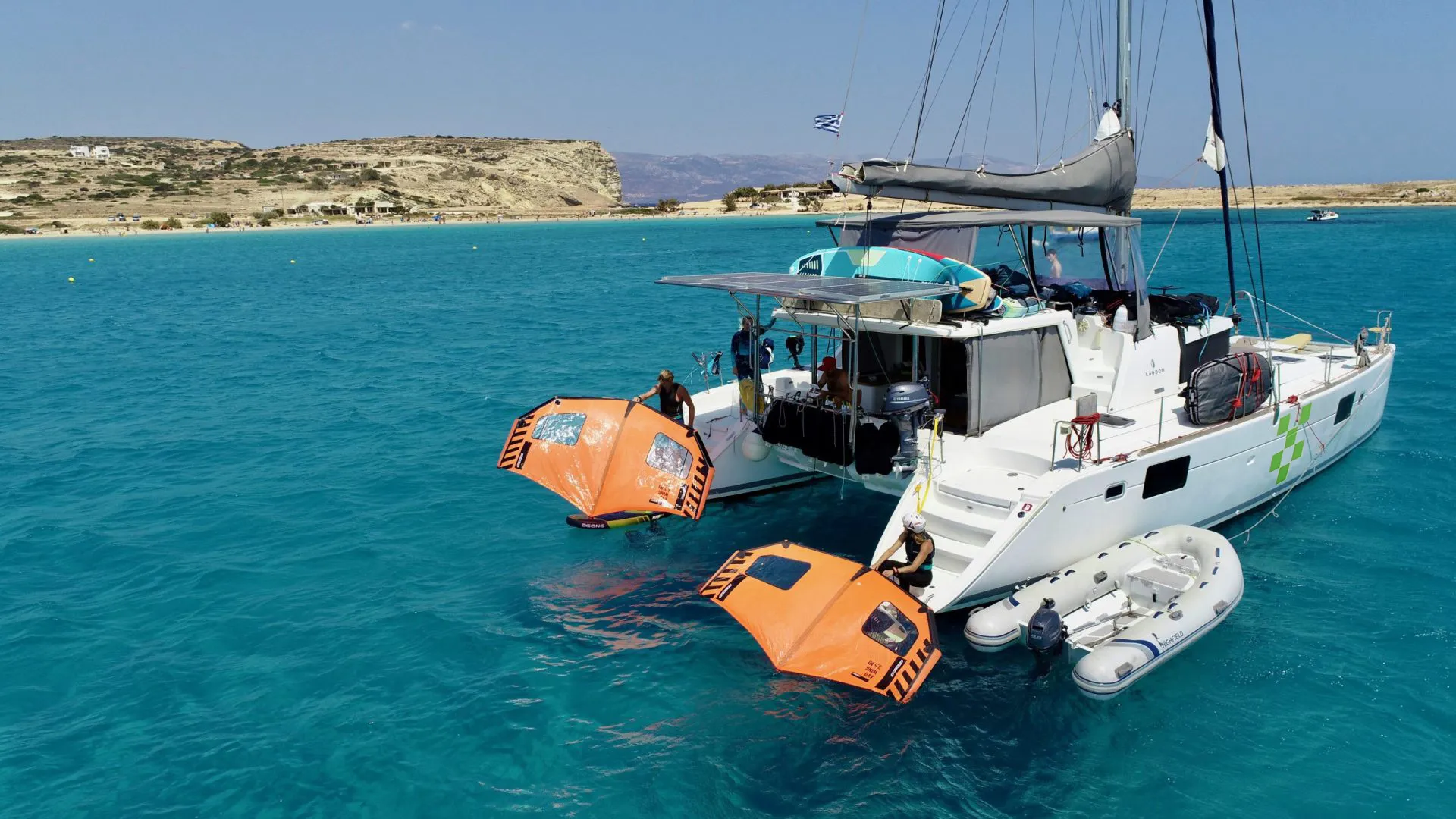
Most Mediterranean and Caribbean trips use a sailing catamaran between 42 and 50 feet. Four to six double cabins, a skipper, often a cook and always a tender, the small RIB that follows you on the water. In the Red Sea the boats are bigger motor yachts that sleep twenty or more.
The skipper reads the forecast at breakfast and picks the anchorage. When it blows in the morning you ride before lunch. When a thermal fills in after midday you eat first. Between sessions the boat moves on, sometimes two miles, sometimes twenty. Dinner is on board or in whatever harbour town you end up in.
Getting on the water is different from a beach. You launch from the stern steps or the swim platform and start in deep water, so a solid knee start or water start is the one skill you really need. Landing means riding back to the boat, dropping the wing downwind and swimming the board to the steps. Riders who can stay upwind get the most out of it. Drift away from an anchored boat and the tender has to come and fetch you, which is fine once and a bit awkward the fourth time. A few trips include coaching for less experienced riders; the Cyclades coaching week is built around it.
Where wing foil cruises run
Sardinia and Corsica: the Strait of Bonifacio
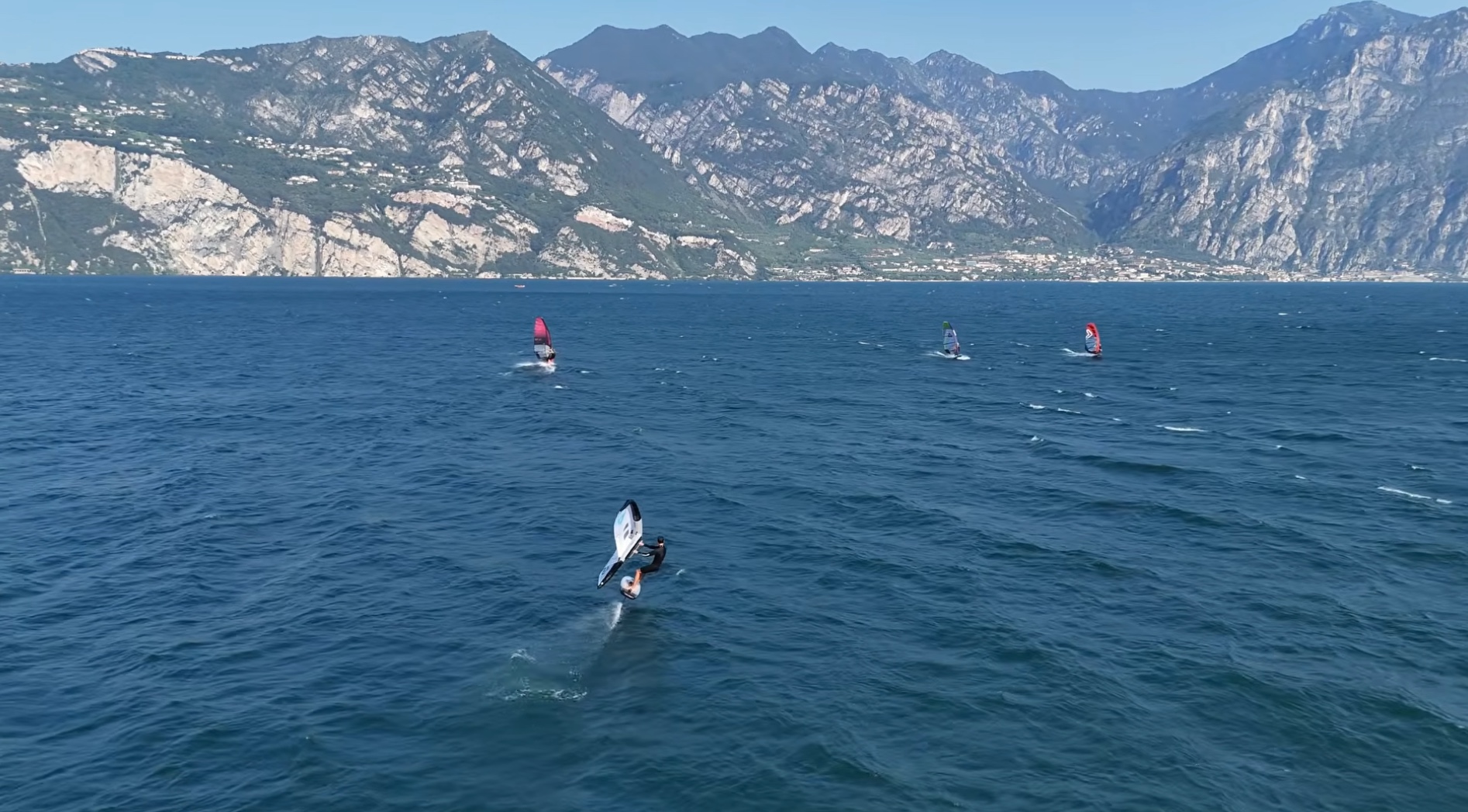
This is the classic European wing foil cruise, and for good reason. Boats leave from Olbia or Palau and spend the week between northern Sardinia, the La Maddalena archipelago and the south of Corsica. The strait between the two islands is only about 11 km wide. Westerly winds, the Maestrale and the Ponente, squeeze through it and pick up speed. The Levante from the east does the same in reverse. When one side is too windy, the other side of an island is usually rideable.
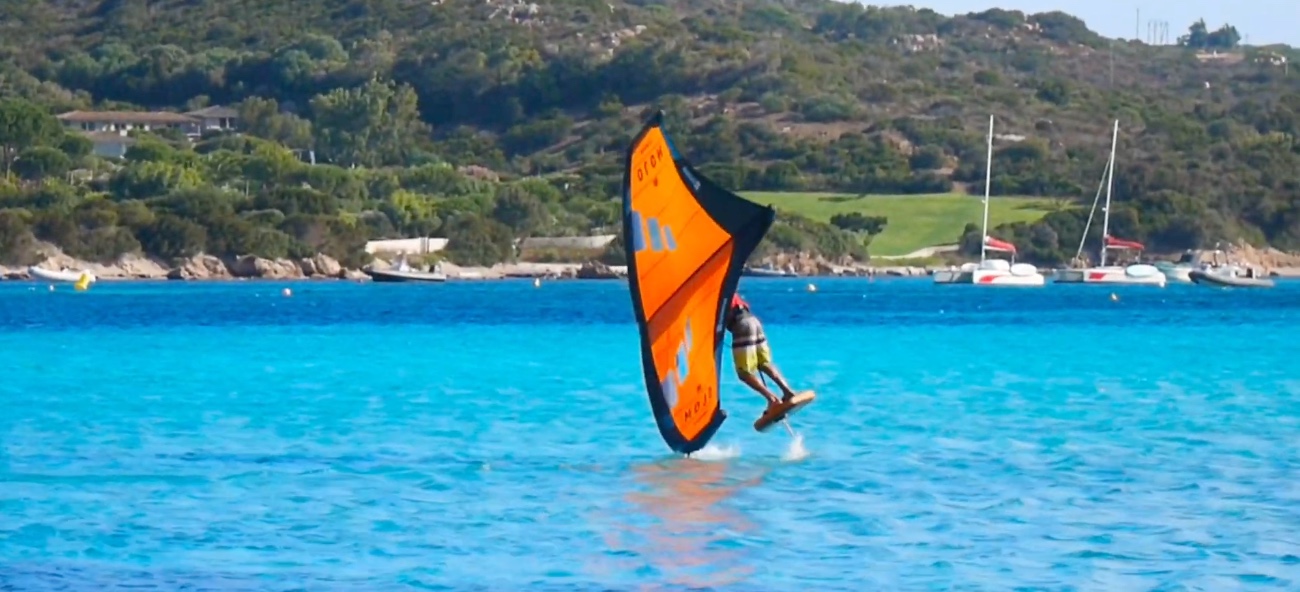
Porto Pollo is the obvious first stop: a sandy spit with a sheltered bay on one side and the full strait on the other. Across the water in Corsica, Plage de Piantarella near Bonifacio has a shallow lagoon behind a reef that goes glassy flat in a westerly. Balistra is a quieter bay further north.
The catch: in July and August the anchorages fill up with charter boats, and a proper Mistral above 30 knots sends everyone looking for a sheltered bay. May, June and September are the sweet spot.
Two cruises run here on Gusty. EOLO is a Lagoon 450F catamaran that sails from April to October, and Ocean Ad Ventures runs weeks in May and June. For the land-based side of both islands, read the Sardinia guide and the Corsica guide.
Greek Cyclades: riding the Meltemi
The Meltemi is a northerly wind that blows across the Aegean all summer. In July and August it regularly reaches 20 to 30 knots and can stay there for days. June and September are softer, typically 15 to 25 knots, which is the range most wingers actually want.
The islands work like wind shelters. Behind Paros and Antiparos the water flattens out while the wind keeps its strength. Pounta Beach on the channel between the two is the busiest stop. Chrysi Akti on the east coast of Paros is wider and wavier. On Naxos, Mikri Vigla has flat water on one side of the headland and chop on the other. Some boats sail north to Rineia, the uninhabited island next to Delos, for lagoons you only reach by sea.
The catch: a full Meltemi turns the crossings between islands into a rough ride. If you get seasick, pick June or September.
Three cruises run here on Gusty: a seven-day coaching week on a Lagoon 500 (€2,550 per person, June to September), a seven-day catamaran getaway (€2,550, May to October) and a fourteen-day expedition with We Are Wind Lovers.
Want lighter wind? The Ionian side of Greece runs on a thermal. Around Lefkada a northwesterly fills in from mid-afternoon at 15 to 25 knots, and mornings are calm. Vasiliki is the best-known spot, and The Foiling Magazine's Lefkada feature shows what winging between anchored yachts looks like there.
Croatia: short hops and a gentle thermal
Dalmatia is the easy-going option. The Maestral is a northwesterly thermal that builds around noon, blows 12 to 20 knots through the afternoon and dies at sunset. Sailing distances are short and there is a harbour town every evening.
The Split to Korčula cruise on Gusty runs eight days on a Lagoon 50, via Bol, Hvar, Vis and Korčula, from May to October for €1,750 per person. Bol on Brač, where the channel between Brač and Hvar speeds the Maestral up, is usually the windiest stop of the week.
The catch: plenty of days sit at 12 to 15 knots. Bring your biggest wing and a large front wing. And if the Bura blows, a gusty northeasterly that is most common outside summer, skippers stay in port.
The Caribbean: Grenadines and Antigua
Warm water, steady wind and reef lagoons. The trade winds blow from the east and northeast, mostly 15 to 20 knots from December to June, and rarely much stronger. The water is around 27 °C, so no wetsuit.
In the Grenadines the boats anchor behind the reef at the Tobago Cays, where the water inside is flat and the open sea starts just beyond it. Union Island and Petit St Vincent are close by. On Gusty you'll find a Grenadines voyage from December to March and an Antigua and Barbuda cruise that runs most of the year outside late summer. Further north, the Exumas in the Bahamas are a newer option.
The catch: long flights, and many Caribbean boats are chartered privately and priced per boat, which can mean five figures for the week. Hurricane season from June to November ends the season.
The Egyptian Red Sea: liveaboard lagoons
The Red Sea does it on a bigger scale. Motor yachts leave Hurghada marina for seven nights among the offshore islands: Tawila, Geisum and Abu Minqar. Tawila has a huge, shallow lagoon that stays flat in any wind. The north wind is reliable most of the year and strongest from May to September.
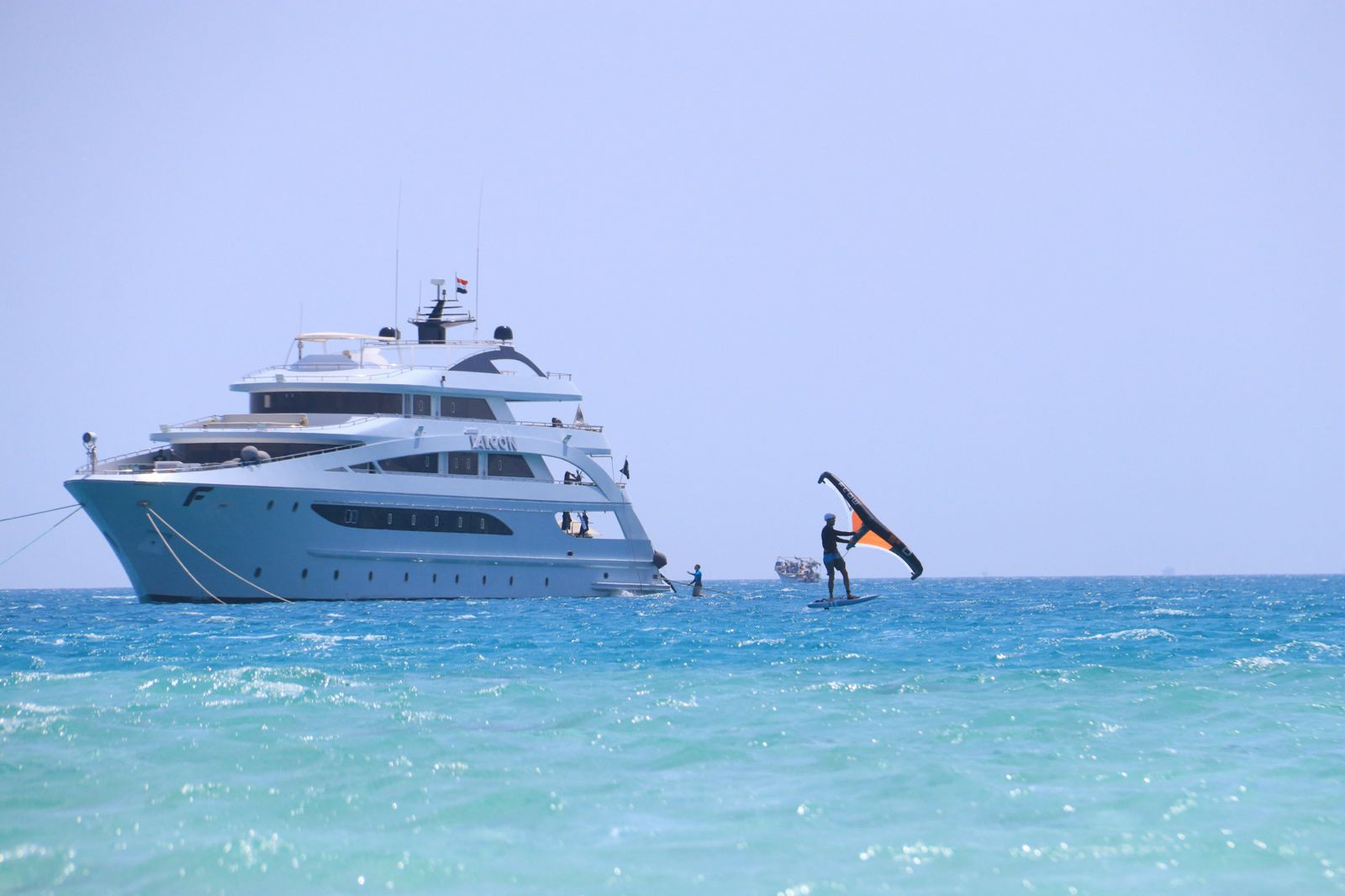
It is also the cheapest wing foil cruise, often €1,000 to €1,700 per person per week, with meals included. The boats are large, so you share the lagoon with a group. The lagoons are shallow, so pack a short mast.
Two Red Sea cruises are on Gusty. Sick Dog Surf's eight days on Heaven Liberty follow the classic north loop from Hurghada: Abu Minqar, two days at Tawila, Geisum, and on day six a downwinder from the Ashrafi Islands back to Geisum. It starts at €1,050 per person, with weekly departures from September to early January. The MY Falcon week is the comfortable option: a luxury yacht with a sauna and jacuzzi, Duotone wing gear to rent and headset lessons for beginners. From €1,400 per person, in May, June, September and October.
Off the usual map: Brittany and Brazil
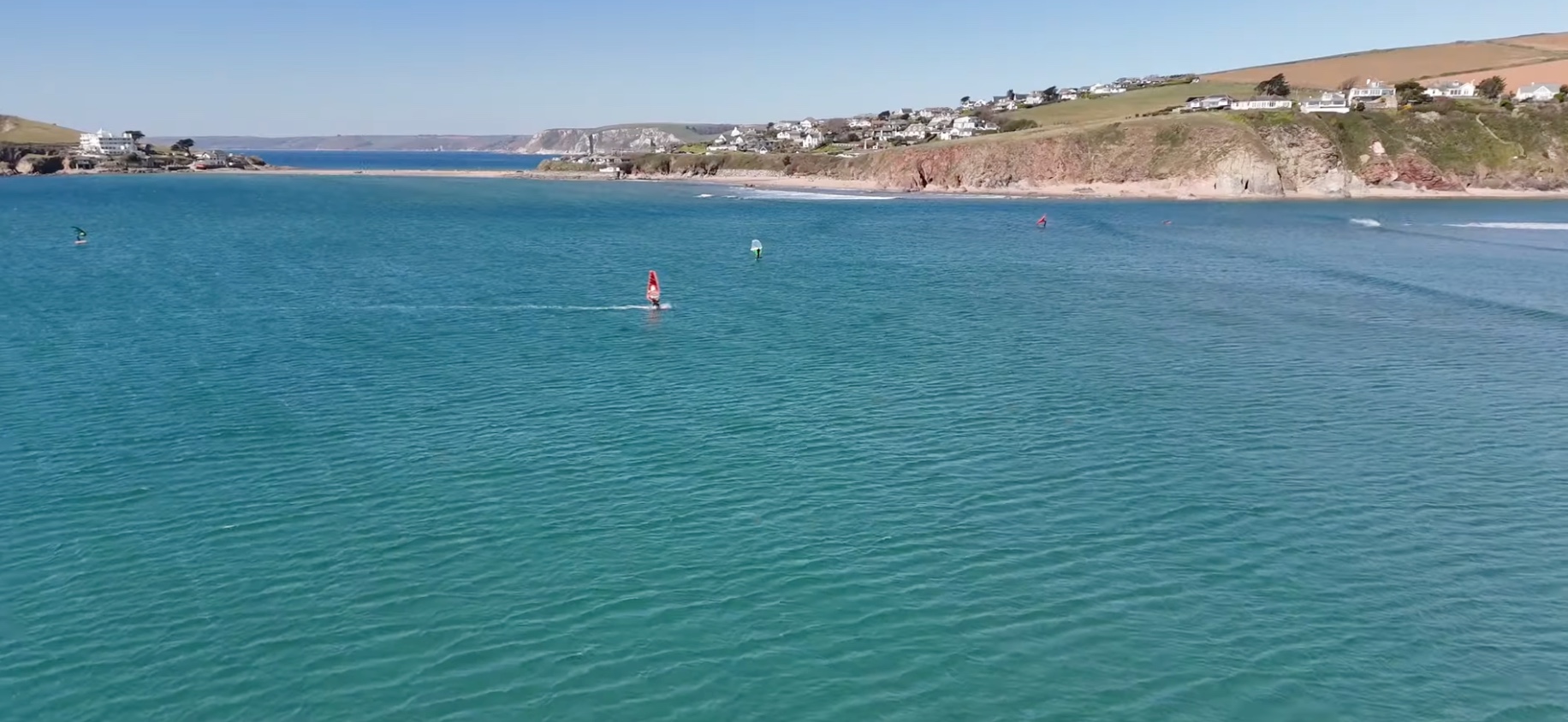
Not every cruise needs palm trees. In Brittany a six-day Glénan trip on an Excess 11 catamaran sails from La Trinité-sur-Mer to the Glénan archipelago: white sand, turquoise water and tides you have to plan around. Water in spring is about 14 °C, so bring a 4/3 or 5/4. Concarneau is the nearest spot on the mainland.
The strangest one on the list is a river trip on the Tapajós in Brazil. You start in Santarém and live on a floating lodge, riding warm fresh water off white sandbanks in August, when the river drops and the wind picks up.
Prefer the coast to the river? Ventus runs a Ceará downwind trip that swaps the boat for a 4x4. Eight days from Paracuru to Guriú, four or five downwinders on the trade wind with the car following along the beach, and flat lagoons in between. Departures run from October to December, from US$2,195 per person.
What a wing foil cruise costs
Shared-cabin weeks in the Mediterranean cost €1,700 to €2,600 per person: €1,750 for Croatia, €2,550 for the Cyclades. The Red Sea is cheaper at €1,000 to €1,700. Brittany is cheaper still, €960 for six days. Caribbean cabins exist, but a lot of boats there go as private charters and are priced per boat.
Usually not included: flights, transfers, gear rental, alcohol, dinners ashore and travel insurance. Some boats also run a shared kitty for food and marina fees. Ask before you book.
What to pack for a week on a boat
Space on board is tight. Soft bags fit in cabins; hard suitcases often do not.
- Board. An inflatable or compact board makes life easier on deck. Rigid boards are fine on a big catamaran, but tell the operator before you arrive.
- Wings. Bring at least two sizes. For the Meltemi think 4 and 5.5 m; for Croatia and the Caribbean, 5 and 6.5 m.
- Foil. A shorter mast for the shallow lagoons of the Red Sea and the Tobago Cays. Spare screws and the tool. You cannot drive to a shop.
- Leashes. For both the wing and the board. A lost board in deep water drifts faster than you swim.
Add an impact vest, reef shoes, a wetsuit that matches the water temperature and more sunscreen than you think you need.
Staying safe off an anchored boat
Ride upwind of the boat, not downwind. Agree on hand signals with the tender driver before the first session. Do not ride a channel alone, and come in before the light goes: wind often drops at sunset, and a long swim back in the dark is nobody's idea of fun. When the group plans a downwinder to the next anchorage, the boat follows. Know how to ride downwind and how to gybe on the foil before you sign up for one.
Frequently asked questions
What is a wing foil cruise?
A week or so on a sailing catamaran or motor yacht where the boat moves between anchorages based on the wind, and you wingfoil straight off the boat or from a tender. Accommodation, meals and a skipper are usually included.
Do I need my own gear?
No. Most operators let you bring your own gear, and many rent wings, boards and foils on board. Rental often has to be booked in advance, so check when you book.
What is the best month for a wing foil cruise?
In the Mediterranean, June and September give good wind with fewer crowds. In the Caribbean, January to April. In the Red Sea, May to October.
Can a partner who does not wingfoil come along?
Yes, and many do. Days include snorkelling, swimming, SUP and harbour towns, and the cabin price is the same.
How much does a wing foil cruise cost?
Roughly €1,000 to €2,600 per person per week for a shared cabin, depending on the region. Private Caribbean charters cost a lot more.
Find your trip. Every cruise in this article, plus camps and downwinders, is on the trips page, where you can filter by month, region and price. Want to scout the water first? See every spot on the map.
Written by
Reinoud
Wingfoiler, lifelong windsurfer and kiter and founder of GUSTY. Based in Muiderberg, on the water at Wijk aan Zee, Muiden, Almere Poort and all over Zeeland.
More about Reinoud →