Wingfoil Cruise Hurghada Egypt: Wind, Spots and Boats
Planning a wingfoil cruise from Hurghada? The best months for wind, which wing size to pack, how a week on board works and the two boats we recommend.
WINGFOIL · EGYPT · FLAT WATER · ALL LEVELS · BEST MONTHS JUNE, SEPTEMBER, OCTOBER
A wingfoil cruise from Hurghada is a week on a boat in the Red Sea, anchored off islands an hour or so from the harbour. You wake up at the spot, ride, eat, ride again. The wind is steady, the water inside the reefs is flat, and it suits everyone from your first foil flights to your first jumps. What surprised us most is the price: these boats are properly comfortable and still good value. This guide covers how the week works, the wind month by month, the spots, downwinders and the boats we recommend.
In this guide: how a cruise works, the wind, seasons, the spots, downwinders, life on board, the boats we recommend, what to pack, and a short FAQ.
Quick glance
| Best for | All levels. Freeride, first jumps, downwinders. |
| Wind season | Year round. Most consistent in June, September and October. |
| Water type | Flat water behind the reefs. Wind swell on downwinders. |
| Typical wind | North to northwest. Most days a 3 to 5 m wing, usually 4 to 4.5 m in peak season. |
| Water temperature | Around 21°C in winter, up to 28 to 29°C at the end of summer. |
| Getting there | Fly into Hurghada (HRG). Boats leave from Hurghada Marina. |
| Where to start | Filter the map by water type and wind direction. |
How a wingfoil cruise from Hurghada works
Lots of cruises leave from Hurghada. Most of them head for the islands, about an hour's sailing from the harbour. The rhythm is simple. You arrive on Saturday, sleep on the boat, and the boat sails to the first spot.
From then on the boat is your base. The crew picks each anchorage based on the wind, and you ride straight from there. Some days the boat stays put. Other days it moves while you have breakfast.
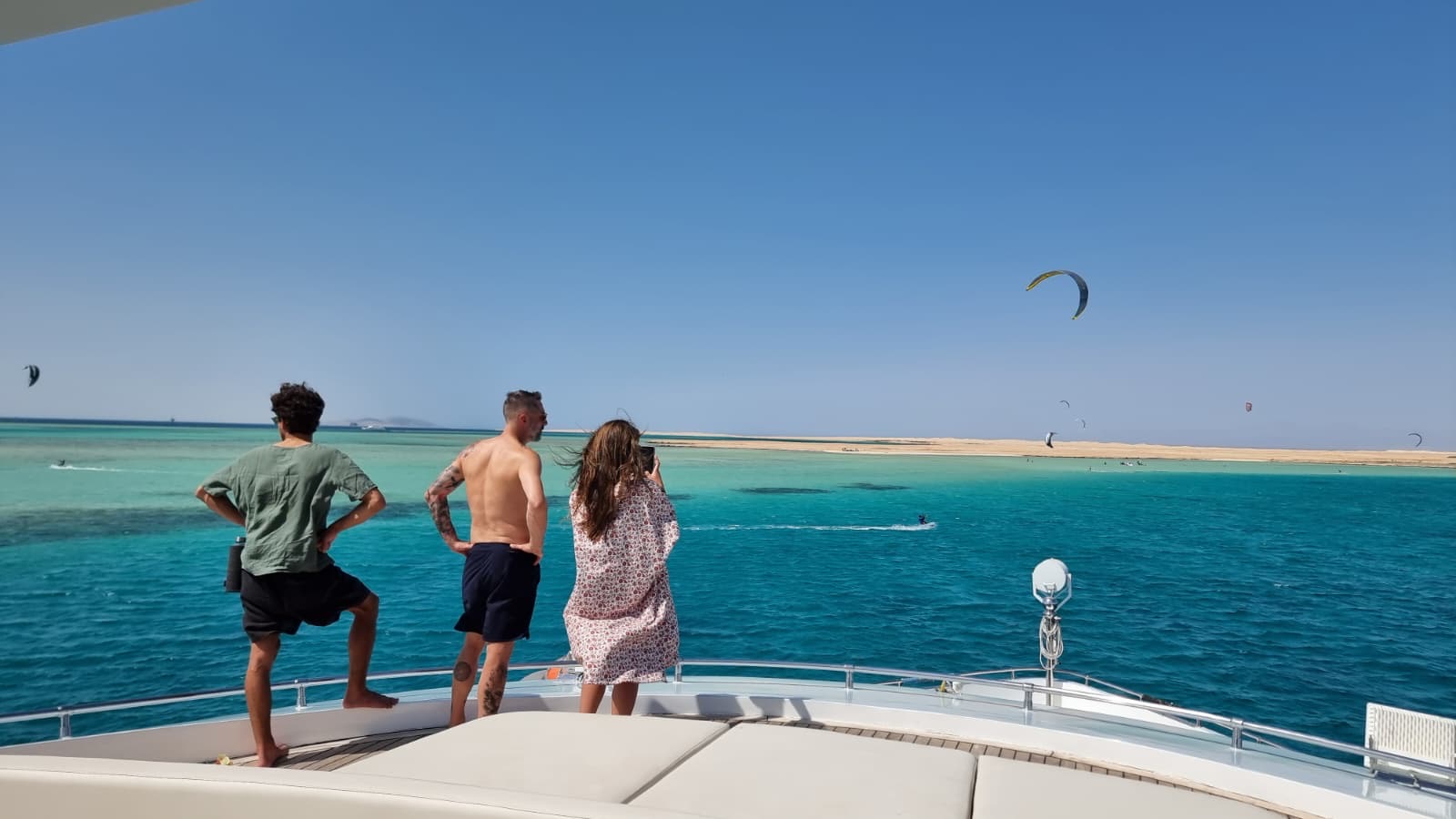
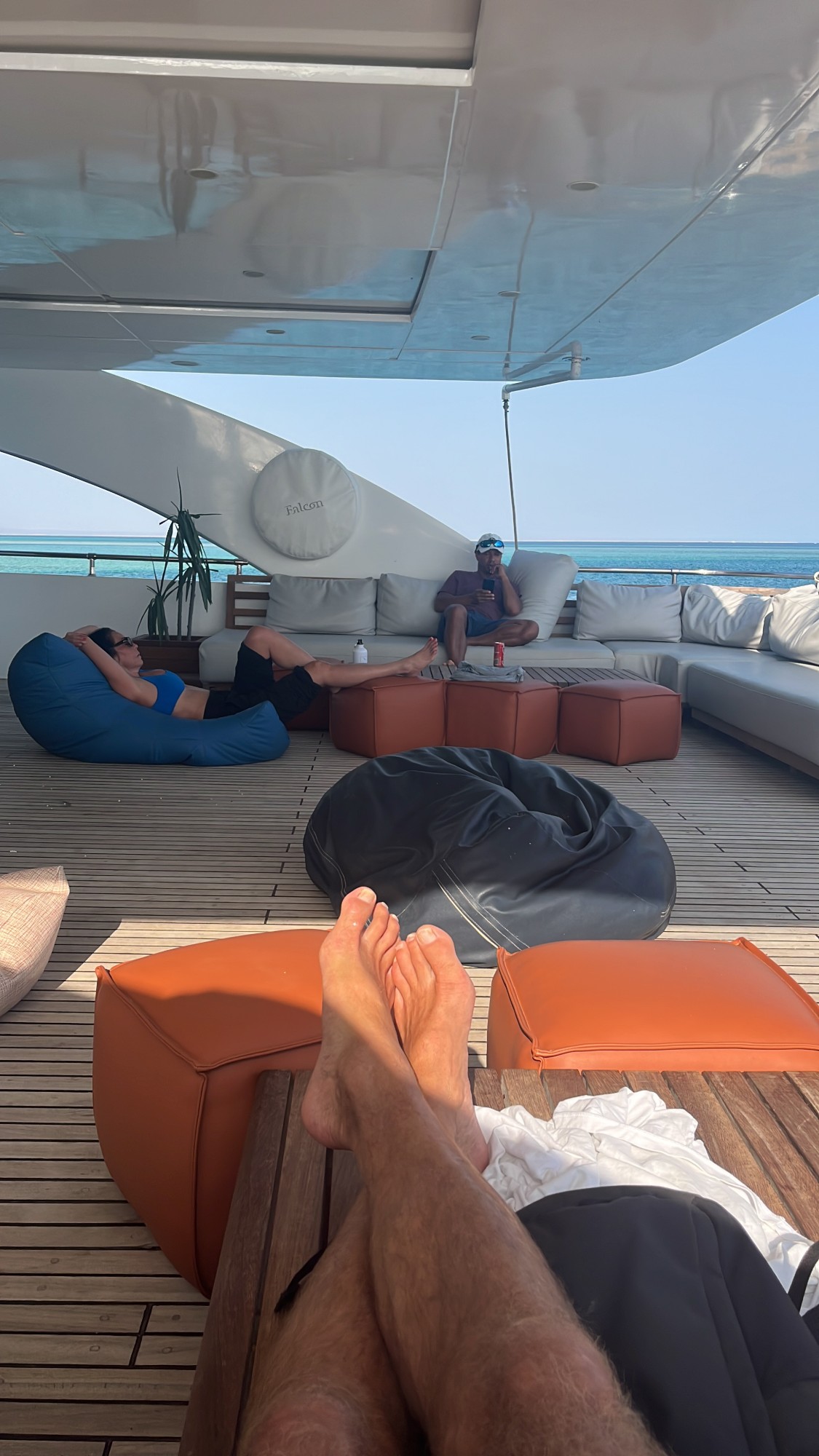
These boats are comfortable, and not necessarily expensive. Space, good food, a friendly crew and chill out decks to hang around on between sessions. For a week of riding three times a day, that comfort counts. It is real value for money.
The wind
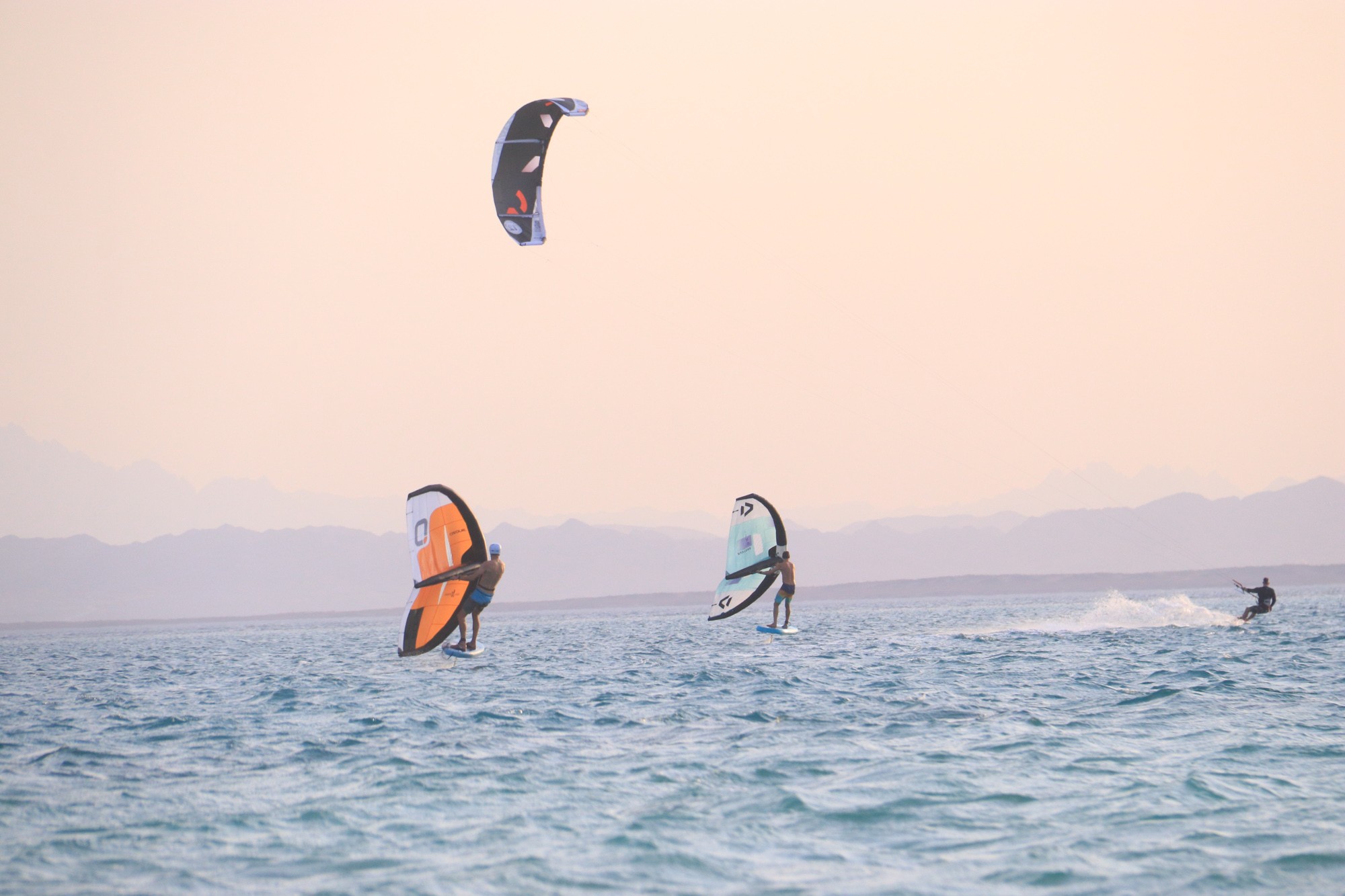
The wind in Hurghada is constant. Most days you ride a 3 to 5 m wing, and in peak season you usually end up on something around 4 to 4.5 m.
There is no such thing as a typical day, but there are patterns. In September, for example, the wind can be very strong in the morning until around 10 o'clock. It then drops during the day and picks up again at the end of the afternoon. On other days it simply blows all day.
Those patterns come from temperature. Depth makes the water cooler in some places and warmer in others, and the land heats up during the day and cools down again. That mix shifts the wind through the day, and it is why even the locals find it hard to say exactly how a day will go.
Forecast tip: on Windguru, look at the GFS 13 km model. For these spots it gives the most accurate forecast.
Seasons: when to go
June, September and October are the months with the most consistent wind. If you want to be as sure as you can be of a full week on the water, book one of these.
July and August are more hit and miss. You can get days in a row that are great, but also a few days where you are out of luck.
From the end of October and through the winter the wind gets lighter. There is still enough of it, just less strong. Pack bigger wings for this period: one size up from your summer quiver, think 5 m and above.
The water stays warm all year. Late summer and autumn are shorty weather or no wetsuit at all. In winter you will want a thin full suit, and a windbreaker on deck in the evenings.
The spots
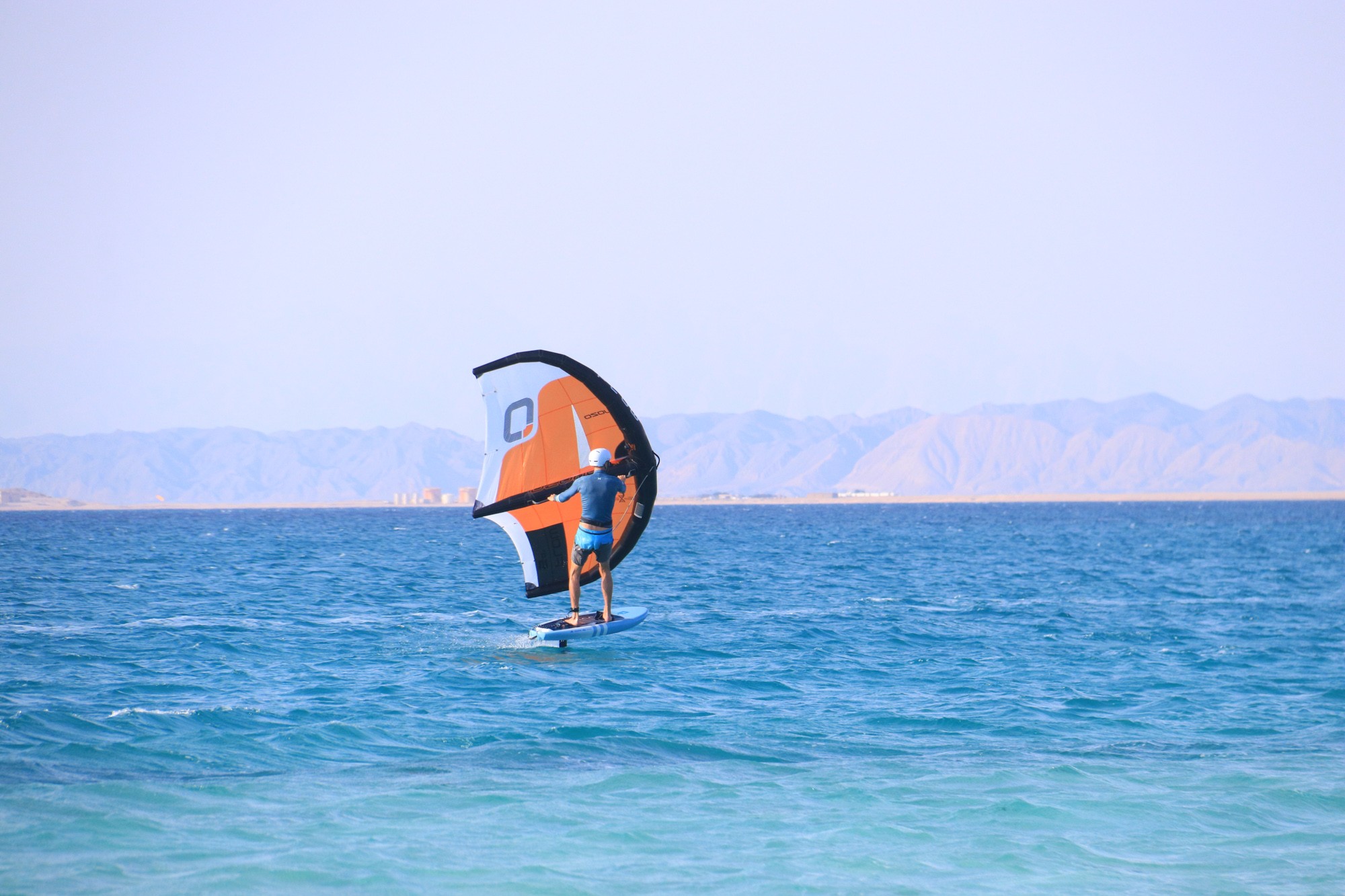
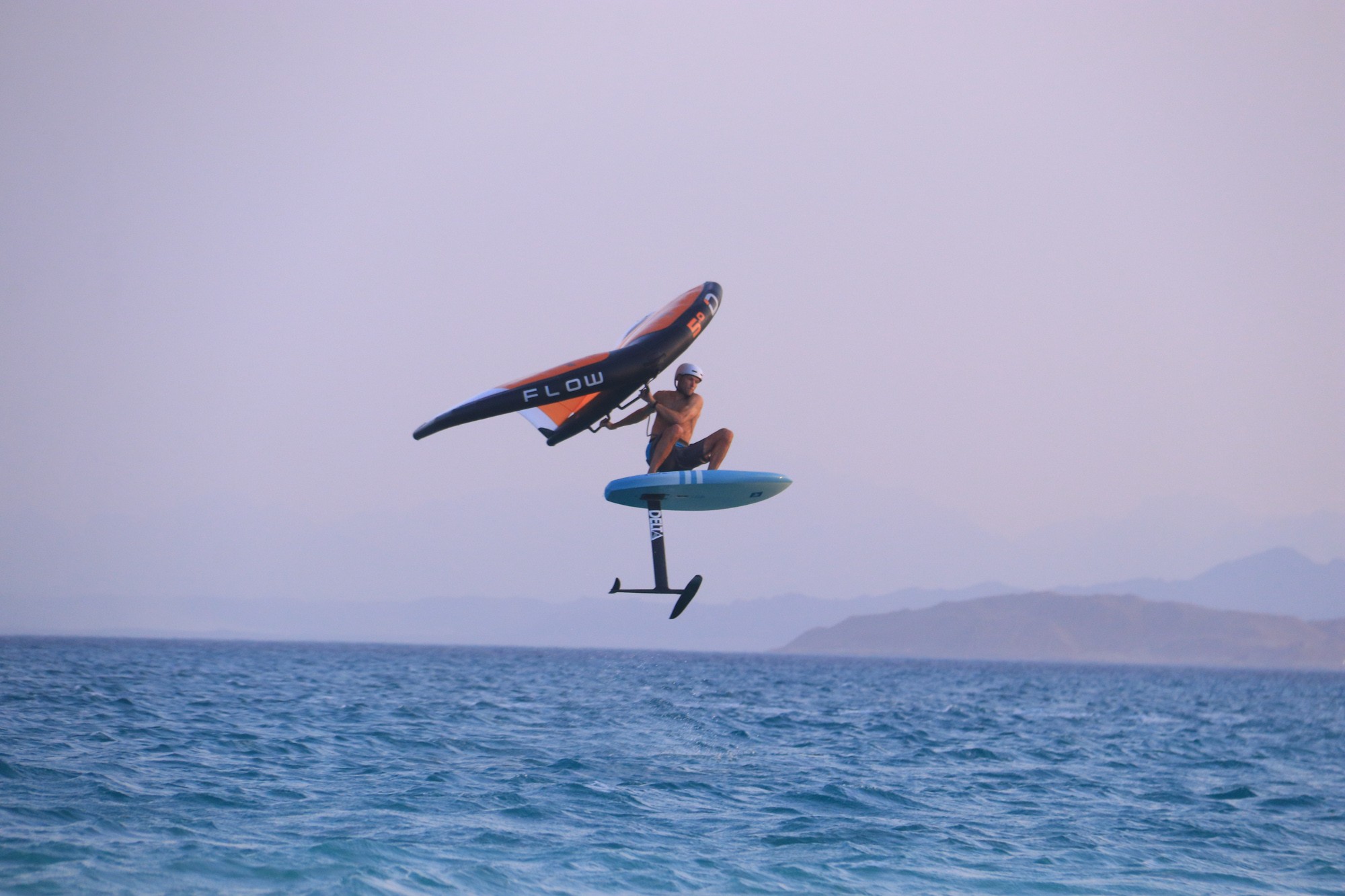
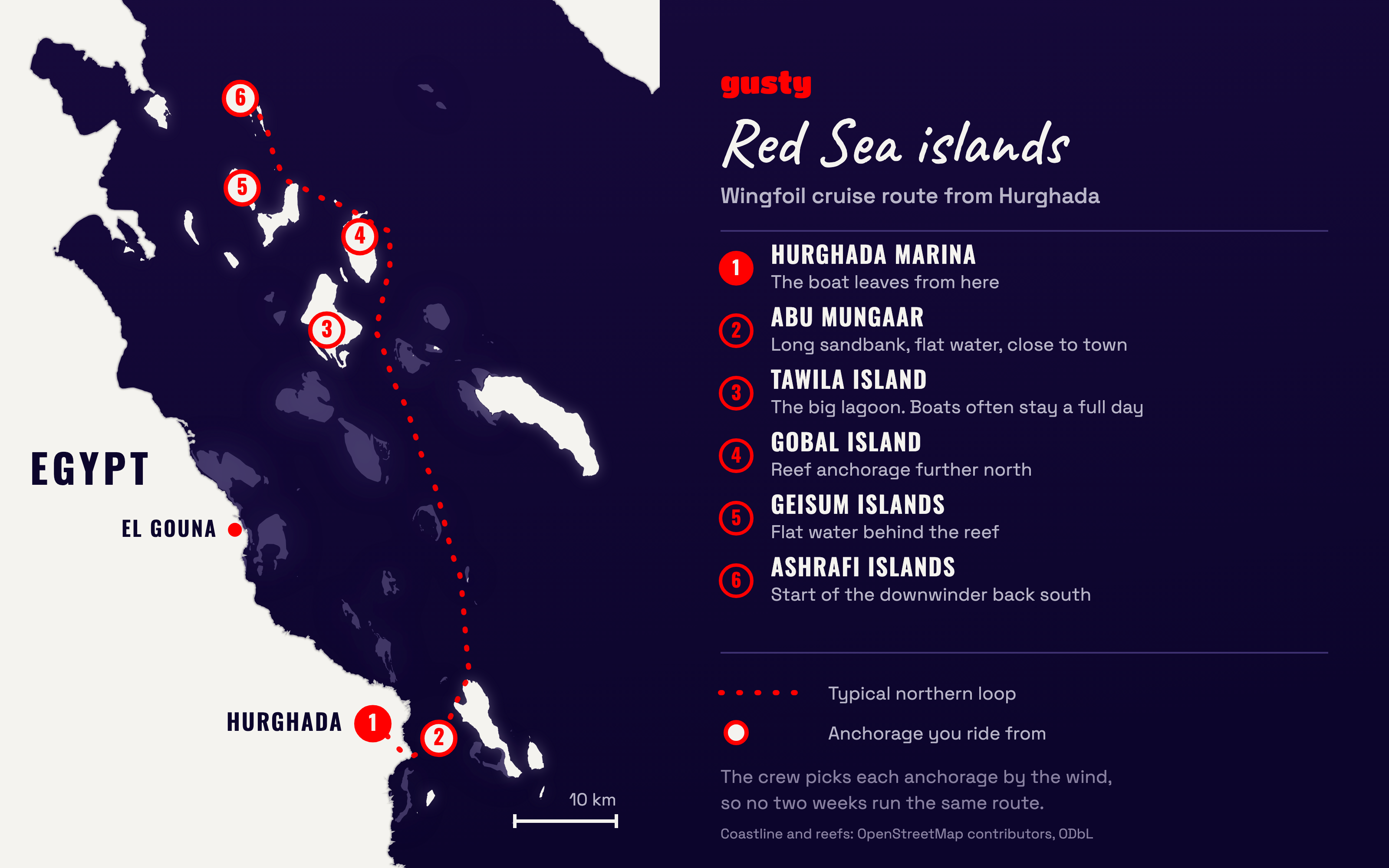
Conditions are flat. This is where you go to freeride for hours, or to practise new jumps: a basic flat water jump is a very realistic goal for the week. The islands have reefs, and along those reefs the water is really flat. The boats mostly work the island groups north of Hurghada. Typical anchorages are Abu Mungaar (a long sandbank close to town), the big lagoon at Tawila, then Gobal, Geisum and the Ashrafi Islands further north. The crew decides each day based on the wind.
Downwinders
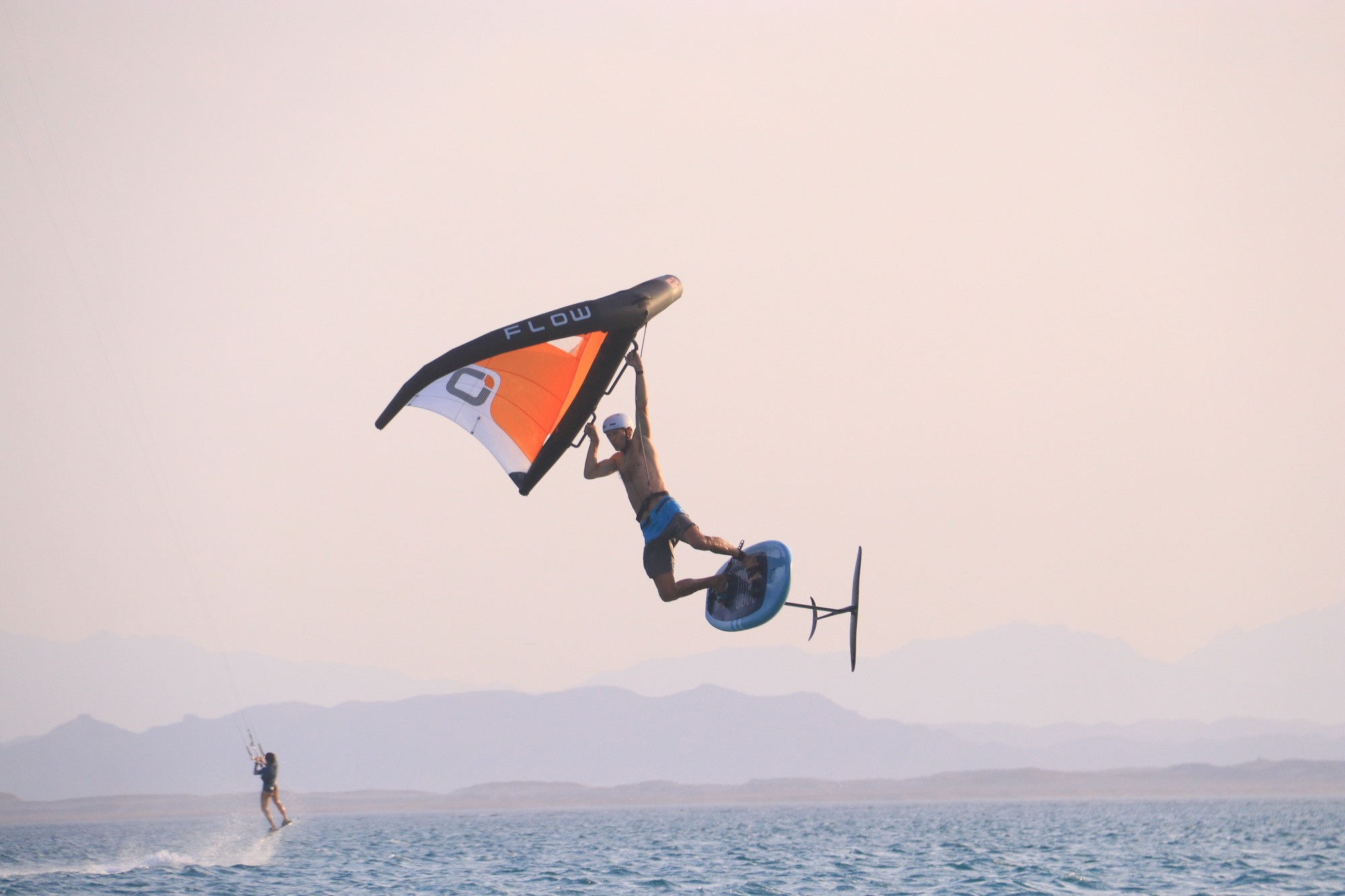
Now and then the boats run downwinders. On those runs you hit stretches with proper wind swell that can get quite big, and you can glide on it for ages. If you are used to flat water, this is a different sport.
If that is what you are after, ask for it before you book. Not every week includes one, and downwinders here can be fantastic. You need to be comfortable riding downwind and gybing on the foil, and the crew follows with a support boat.
Life on board
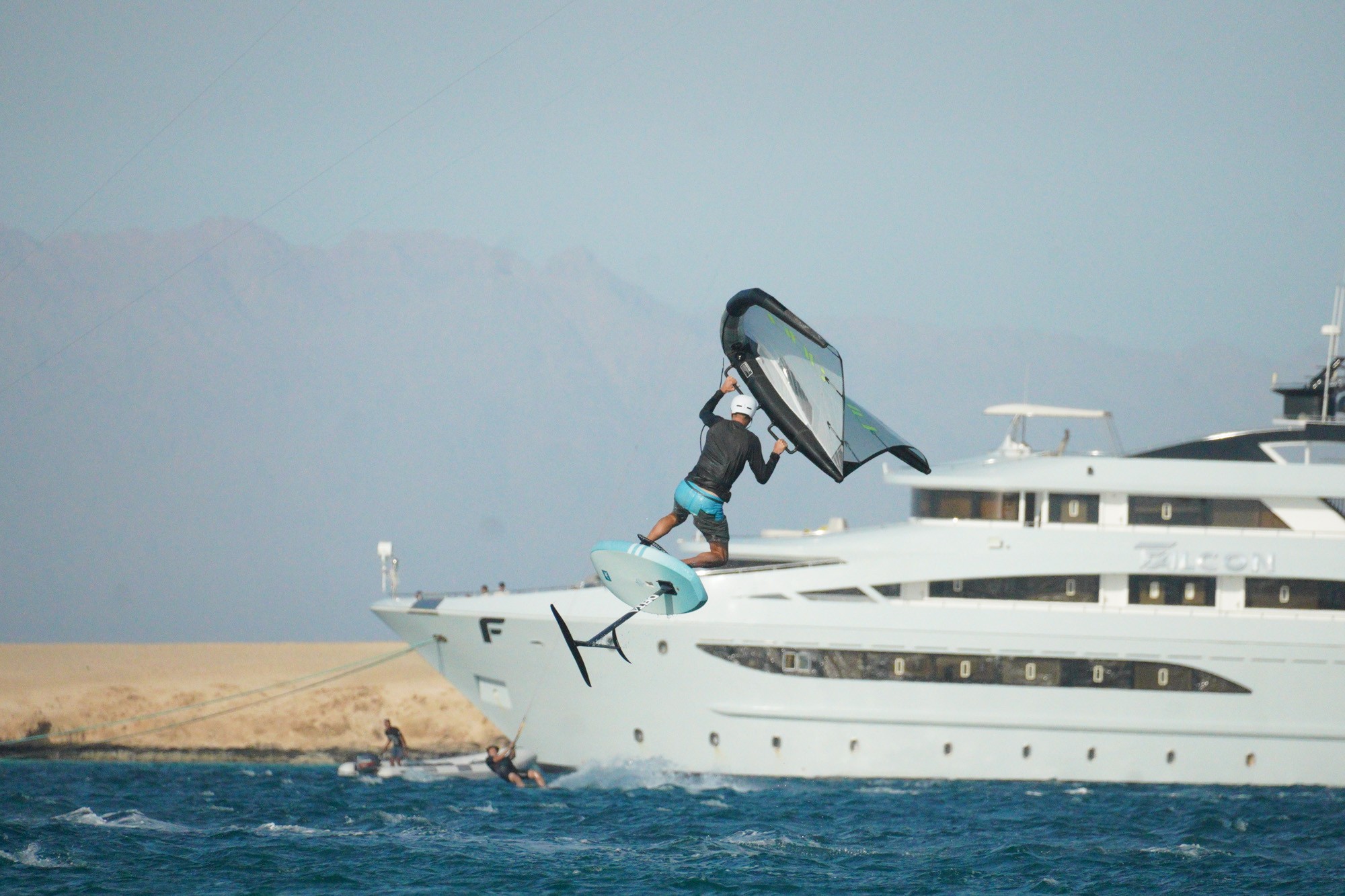
These cruises are booked a lot by kitesurfers, so there is a good chance you share the boat with them. That is no problem on the water. Wingers can always ride along the reefs, where the water is very flat and you have all the room you need.
The kiters are ferried to a beach or reef in small boats. With a wing you can simply jump off the boat. Your gear is rigged and packed away for you, and if you want you can do three long sessions a day. Between sessions you eat, rest in the shade, snorkel, and go again.
Wingfoil cruises we recommend
Both boats below are on Gusty, with the full day by day plan on their trip pages.
MY Falcon (Egypt Kitesurfing Cruise)
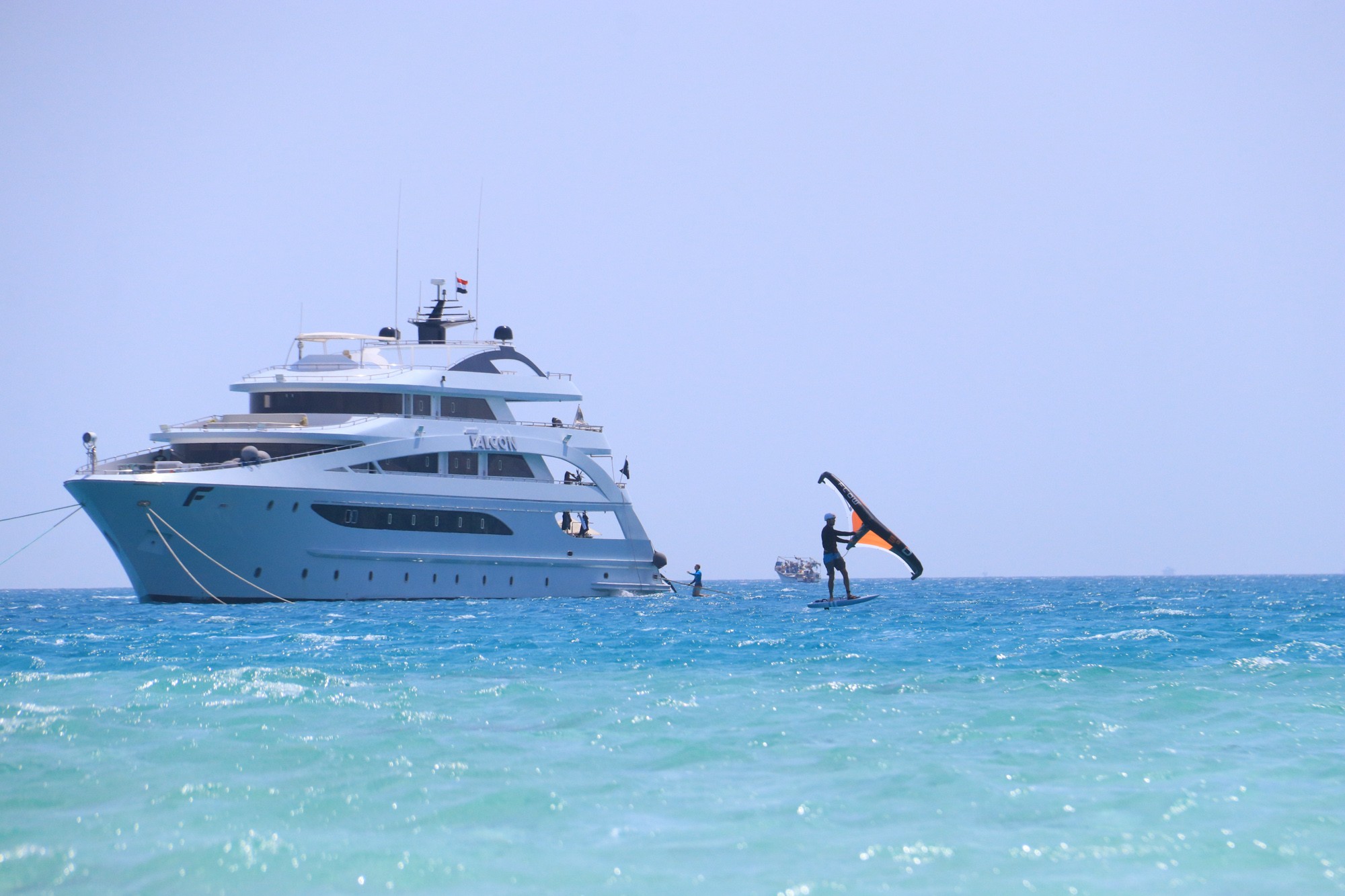
This is one of the foil cruises we recommend. A luxury motor yacht with room for up to 22 riders. There is no fixed route: the crew changes spots three or four times a week depending on the wind, and a tender runs you to the beach and back. Duotone wing foil gear is available to rent, with boards from 135 to 60 litres and wings from 3.5 to 5.5 m. Beginners get one hour lessons with a radio headset, and more experienced riders can book coaching and video analysis. Ensuite cabins, sauna and jacuzzi on board. Departures in May, June, September and October. At the time of writing a week starts at around €1,400 per person, plus a €100 environmental fee. See the MY Falcon cruise
Heaven Liberty (Sick Dog Surf)
A 37 m liveaboard for up to 24 guests, eight days on the classic northern loop: Abu Mungaar, a full day in the Tawila lagoon, Geisum, and a downwinder from the Ashrafi Islands back to Geisum. Two chefs, double cabins with private bathroom and air conditioning, and a rescue boat on the water. Departures run most of the year. At the time of writing it starts at around €1,050 per person. Marine park fees, crew tips and your visa are paid separately. See the Heaven Liberty cruise
Want to compare with cruises elsewhere? Read our overview of wing foil cruises around the world.
What to pack
- Wings from 3 to 5 m in summer, one size bigger from late October
- A foil setup you know well, plus spare screws and tools. There is no shop on an island
- Impact vest and helmet, especially for jumps and downwinders
- Shorty or 2 mm suit, lycra, reef booties
- Plenty of reef safe sun cream, a cap and sunglasses with a strap
- A windbreaker for evenings on deck
FAQ
Is a wingfoil cruise in Egypt suitable for beginners?
Yes. The water along the reefs is flat and several boats offer lessons on board. Experienced riders get jumps and downwinders out of the same week.
When is the best time for a wingfoil cruise from Hurghada?
June, September and October have the most consistent wind. July and August are more hit and miss. From late October the wind gets lighter, so bring bigger wings.
Which wing size do I need in Hurghada?
Most days a 3 to 5 m wing. In peak season most riders are on 4 to 4.5 m.
Which forecast should I use?
On Windguru, the GFS 13 km model gives the most accurate forecast for these spots.
How many sessions a day can I ride?
Up to three long sessions if you want. The crew rigs and packs away your gear.
Plan your trip
Every Red Sea spot is on the map, with wind direction and water type. See every spot on the map
Written by
Reinoud
Wingfoiler, lifelong windsurfer and kiter and founder of GUSTY. Based in Muiderberg, on the water at Wijk aan Zee, Muiden, Almere Poort and all over Zeeland.
More about Reinoud →