Is Wingfoiling Hard to Learn? An Honest Timeline
Wondering if wingfoiling is hard to learn? Here's a realistic timeline, what actually slows people down, and how to get foiling faster. Its a yes and no. No because you can get going within just a few sessions. But yes because to really get a feel of the jibe, you need to be persistent. But once that happens, you are hooked!
Short answer: wingfoiling is easier to pick up than it looks, and harder to fully master than most beginners expect. Those two things are both true at once, and that's exactly what makes it such a satisfying sport to learn. This article walks through a realistic timeline, what actually slows people down, and how to stack the odds in your favour from session one.
Quick-glance answer
| What to expect | |
| Land practice | 1 to 2 hours to get comfortable holding and steering the wing |
| First water starts | Usually within your first 1 to 2 sessions |
| First foil flights | Most riders get airborne within 3 to 5 lessons with instruction |
| Independent riding | 6 to 10 sessions from zero board sport experience, 3 to 5 with a surfing, snowboarding or wind sports background |
| Where to start | Explore wingfoil spots |
Why it feels approachable early on
Compared to windsurfing's mast and boom or kitesurfing's lines and bar, a wing is a simple object. It has two handles, it inflates in a few minutes, and it depowers the moment you let it luff. Most schools start you on land, letting you get a feel for steering, power and the neutral position where the wing generates almost no pull. That land phase, usually an hour or two, does more for your progress than people give it credit for. It builds the muscle memory you'll need once you're also trying to balance on a moving board. Its something also more experience wingers still do when learning new tricks
From there, water starts come quickly for most riders. You're not yet foiling, just getting comfortable riding the board flat on the water while managing the wing. This is where a lot of the early wins happen and where confidence starts building fast.
Why the foil is the real learning curve
Here's the part that catches people off guard: the wing is the easy bit. The foil is what takes real practice.
A hydrofoil is sensitive. Small shifts in your weight, a few centimetres forward or back, translate into big changes in how the board behaves. Too far back and the nose pops up sharply. Too far forward and you'll nosedive. Riders typically need several sessions of trial and error before their body learns to make these adjustments instinctively rather than consciously.
The upside is that this phase moves faster than most beginners fear. Structured lessons make a measurable difference here. Riders with a qualified instructor coaching their stance and timing tend to get their first sustained foil flights within 2 to 5 sessions, while self-taught progress tends to take noticeably longer simply from trial and error without feedback, unless you are a experience watersports person.
What actually determines your timeline
A few factors matter more than raw talent:
Prior board sport experience. If you've surfed, snowboarded, skateboarded or windsurfed, your body already understands dynamic balance. That experience transfers directly and typically shaves several sessions off your learning curve.
Quality of instruction. A good instructor watches your stance, corrects small habits before they become ingrained, and picks conditions that set you up to succeed rather than fight the wind. This is consistently the single biggest lever for faster progress.
Conditions. Flat water and steady wind in the 12 to 18 knot range make learning dramatically easier than chop, gusty wind or crowded spots. Choosing the right spot for your level matters as much as effort does.
Right sized gear. A wing and board matched to your weight and the wind on the day removes a huge amount of unnecessary struggle. Oversized or undersized gear will make an already tricky skill harder than it needs to be.
A realistic session by session picture
- Sessions 1 to 2: Wing handling on land, board balance, first water starts
- Sessions 2 to 3: Consistent water starts, controlled power through the wing
- Sessions 3 to 5: First foil flights, short sustained rides
- Sessions 5 to 10: Linking rides together, smoother tacks, riding in slightly tougher conditions
- Beyond session 10: Gybes, longer downwind runs, and riding in a wider range of wind
Everyone's curve looks a little different, and that's fine. What matters more than hitting these milestones on schedule is avoiding the mistakes that actively slow people down. We've broken those down in detail in our guide to common wingfoil beginner mistakes.
See it in action
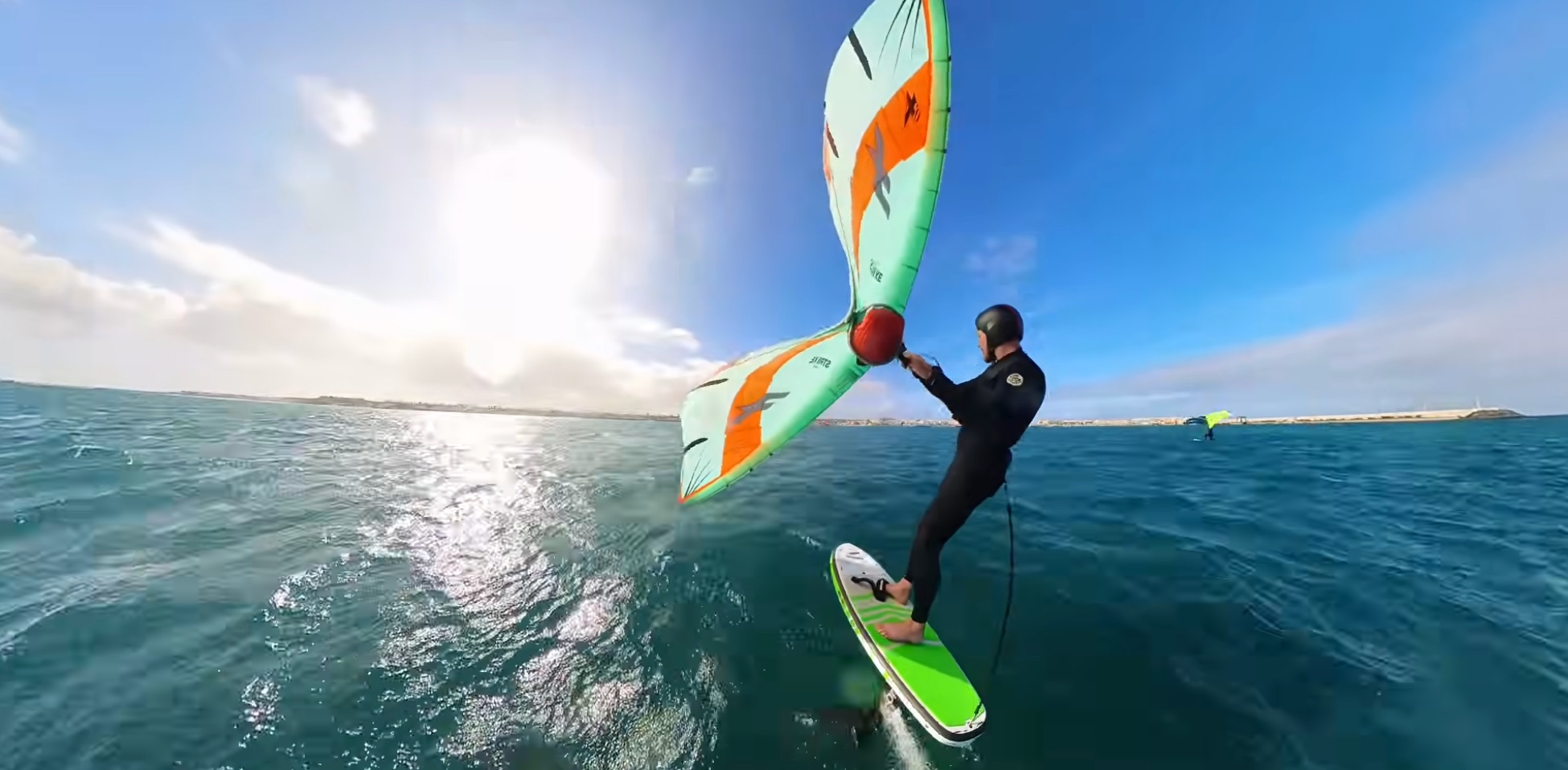
Notice how little the rider fights the wing once they're settled. That calm, economical style is exactly what a few sessions of practice builds toward.
The honest takeaway
Wingfoiling isn't hard in the way that scares people off, but its also not something that works just like that. But once you have the jibe mastered, the world of wingfoiling opens up and you are hooked (about 15 - 25 sessions before you really get a feel of the jibe.) Most riders are up and foiling within their first three to five lessons, and genuinely comfortable within ten. The sessions that get you there fastest have three things in common: land practice before water time, a few hours of proper instruction, and conditions matched to where you're actually at.
Ready to find your first session? See every wingfoil spot on the map, filtered by wind direction and water type, and start where the conditions work in your favour.
Frequently asked questions
How many lessons before I can foil?
Do I need board sport experience to learn wingfoiling?
How much wind do I need to learn?
How long before gybes feel natural?
Written by
Reinoud
Wingfoiler, lifelong windsurfer and kiter and founder of GUSTY. Based in Muiderberg, on the water at Wijk aan Zee, Muiden, Almere Poort and all over Zeeland.
More about Reinoud →